
October 29, 2026
When a family member begins needing more support, many families recognize that something has changed before they know what the next step should be.
Maybe daily routines have become more difficult. Maybe there are new concerns about safety or managing responsibilities independently. You may be wondering whether the support someone has today will continue to meet their needs.
For many families, the question becomes: What is the difference between assisted living and memory care, and how do you know which option may be appropriate?
The answer is not always straightforward. Every person has their own needs and preferences, and understanding those differences is an important part of exploring care options.
At Bayview, we believe these conversations should begin with understanding the individual and what matters most to them. With the support of our full-time social worker and care team, families can explore their options and better understand what level of care may be appropriate.
Let’s explore some of the common questions families have when considering assisted living and memory care.
Assisted living and memory care are both supportive environments, but they are designed around different needs.
Assisted living is often a good fit for someone who wants to remain independent while receiving additional support throughout the day. At Bayview, assisted living includes 34 apartments, where residents can receive help with medications, bathing, dressing, or other activities of daily living while continuing to make choices about how they spend their time.
Memory care is designed for people living with Alzheimer’s or other forms of dementia. At Bayview, Dorothy’s Place is a secure memory care residence with 10 studio apartments, providing an environment designed to support residents who may be at risk of wandering. This smaller setting offers additional structure, specialized care, and programming designed around the needs of people experiencing memory loss.
Someone does not have to move through one level of care before another. The right choice depends on the individual’s needs, preferences, and what will best support their quality of life.
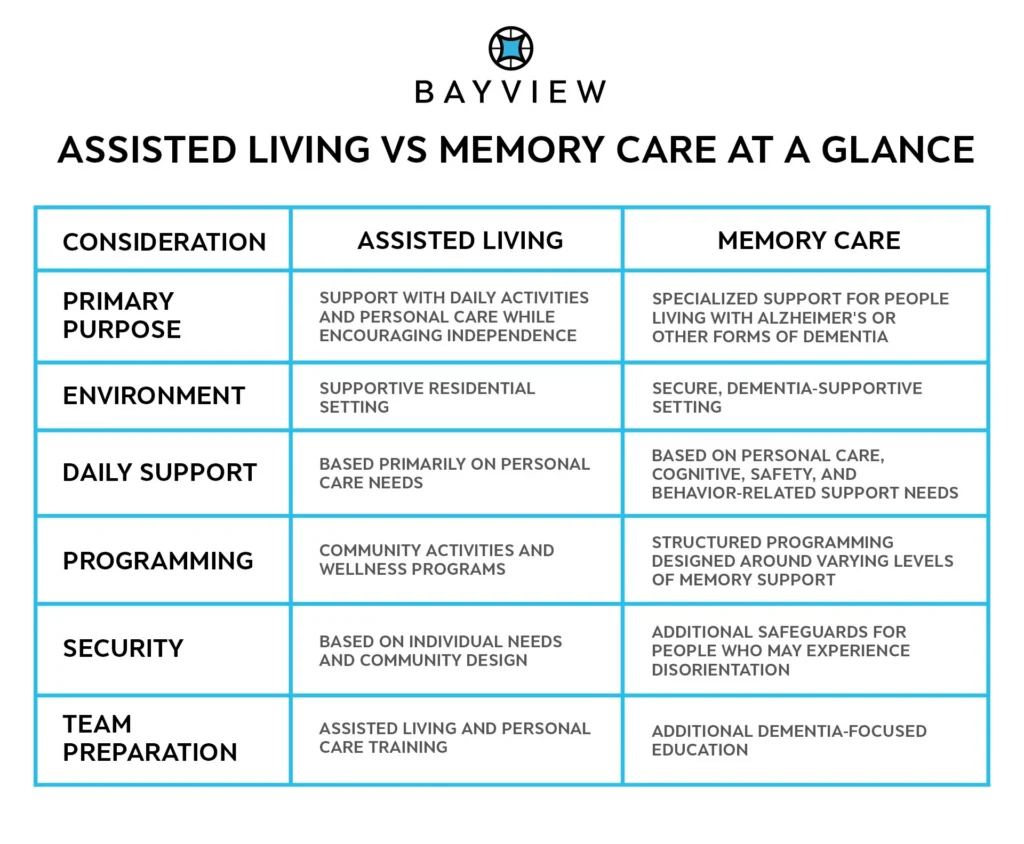
This comparison offers a general overview of the differences between assisted living and memory care. However, the right level of support depends on each person’s individual needs and circumstances.
No. A dementia diagnosis alone does not determine what type of support someone needs.
When families receive a diagnosis, they may wonder what changes to expect and whether memory care is the next step. The answer is different for every person.
It is important to consider the whole picture. What can the person continue doing independently? Where might they need additional support? What brings them comfort, and what activities are important for them to continue?
Someone living with dementia may continue to do well in assisted living with the right support, while another person may benefit from the additional structure and security of a memory care setting.
Care needs can change over time, and those changes do not always happen predictably. Bayview’s full-time social worker can help families talk through their questions and understand the care options available as they consider what may be appropriate for their loved one.
Families often begin exploring memory care after noticing changes in daily routines, communication, or the level of support someone needs.
Some things families may want to discuss include:
These considerations do not automatically mean someone needs memory care. They are opportunities to begin a conversation and better understand what support may be helpful.
There is no universal timeline for moving to memory care. The goal is to consider the individual’s needs and find an environment that supports their quality of life.
Before exploring different care options, it is important to understand the person first.
Consider what someone can do independently and where they may need additional support. Their daily routines and what matters most to them are also important parts of the decision.
Families may have questions about safety or financial considerations. They may also be wondering how a change in care could affect someone they love. These decisions can feel overwhelming, especially when there is uncertainty about what comes next.
At Bayview, our full-time social worker is available to listen and help families work through their questions as they explore care options. The goal is to help families make informed decisions based on each person’s individual circumstances.
When visiting memory care communities, families should feel comfortable asking questions and learning how each community approaches care.
Some questions to consider include:
Pay attention to what you observe during a visit, too. Are people being treated with patience and respect? Does the environment seem comfortable and supportive for the person who may be living there?
The goal is to find a community that understands the individual and can provide the support they need.
Dorothy’s Place is Bayview’s intentionally small, secure memory care residence, designed to provide individualized support for people living with Alzheimer’s and other forms of dementia.
With 10 private studio apartments and a 1-to-5 team member-to-resident ratio, the smaller environment allows the team to provide personalized attention and build familiarity with each resident.
One of Bayview’s important benefits is having a full-time social worker available to support residents and families. This dedicated resource provides another layer of guidance as families navigate questions about care, changing needs, and the decisions that come with supporting someone they love.
Other features of Dorothy’s Place include:
Dorothy’s Place is also part of Bayview’s nonprofit Life Plan Community, allowing residents to remain connected to the broader services and resources available throughout Bayview.
Care decisions can bring up many emotions and questions. Families may be trying to understand what support is needed or how a change may affect someone they love.
You do not have to have all the answers before reaching out.
At Bayview, our full-time social worker is here to help families navigate these conversations. Whether you are trying to understand someone’s current needs or considering what support may be helpful in the future, having a dedicated professional to talk with can make the process feel less overwhelming.
There is no single path that works for everyone. What matters most is keeping the person’s needs and preferences at the center of the conversation.
If you are exploring memory care in Seattle or wondering whether Dorothy’s Place may be an appropriate option, you do not have to figure everything out on your own. Reach out to Bayview to talk through your questions and explore what the right next step may be for your family.
Bayview is a nonprofit Life Plan Community in Seattle’s Lower Queen Anne neighborhood offering independent living, assisted living, and memory care. A senior living Seattle community founded in 1961, Bayview features 200+ monthly activities, an intergenerational children’s center, and a strong commitment to LGBTQ+ inclusion through SageCare Platinum certification.














Copyright © 2026 Bayview Community All rights reserved.