October 29, 2026
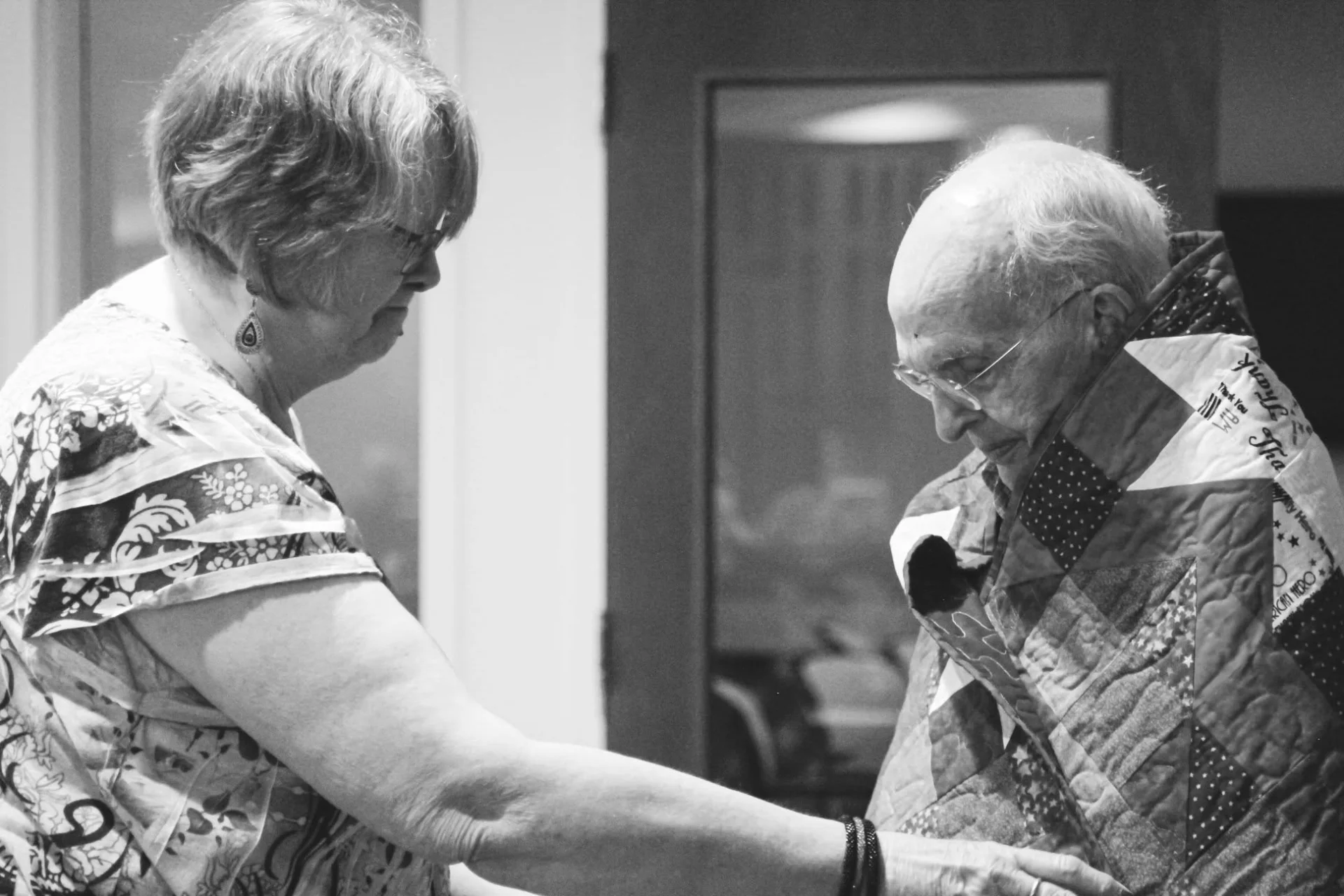
Meet Jack, a 101-year-old Bayview resident and World War II veteran. Through the words of his family, discover the story of his remarkable life, from his military service to the memories and experiences that have shaped him.
Read Jack’s story below, as told by his family.
Jack Howard Collins was born in 1925, in Moscow, Idaho. Jack, who never knew his birth father, formally adopted his mother’s last name of Trowbridge and enlisted in the Army in 1943, through the Army Specialized Training Program (ASTP). The ASTP was established during World War II to train academically talented soldiers in engineering, science, medicine, and foreign languages. After a short basic training program, soldiers were to be sent to college.
Jack, who had recently graduated from high school in Spokane, WA, enlisted at 17, in August of 1943, and was activated in November of 1943, expecting to complete seventeen weeks of basic training, then head to college.
Instead, by February of 1944, the ASTP program was largely terminated due to a severe shortage of infantrymen. So, at the end of basic training at Fort Benning, GA, Jack was sent to Advanced Infantry Training in Fort Jackson, South Carolina, before being sent overseas.
Jack was part of the 87th Infantry Division, nicknamed the “Baby Division” because many of its soldiers were among the first eighteen-year-olds conscripted after the draft age was lowered from twenty to eighteen in November of 1942.
The 87th received their port call to the New York Port of Embarkation in Brooklyn, New York on October 10, 1944.
Jack sailed to the European Theater on October 17, 1944, the month after he turned 19, arriving in England in November of 1944. Jack was a light machine gunner, and served in England, France, Belgium and Luxembourg. He was wounded twice, the first time in the stomach and the second in his arm, an injury sustained during the Battle of the Bulge. His wound was initially treated at a General Hospital in Le Mans, France, followed by a General Hospital in Yorkshire, England. A few days after arriving in England he returned to the US on the hospital ship Queen Elizabeth, which docked in New York City. After a night there he had a 5-day hospital train ride to Spokane and then spent five months recovering at McCaw General Hospital, a WW II Hospital located in Walla Walla, WA.
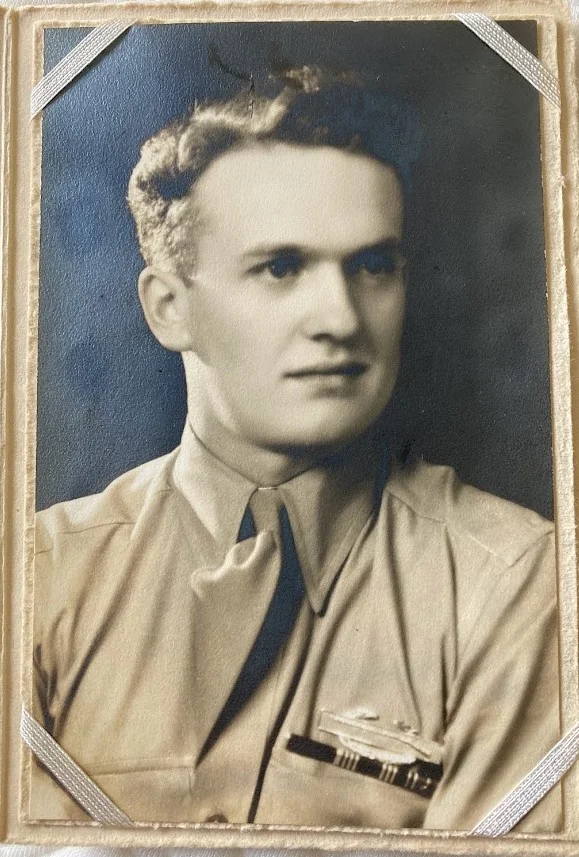
Jack was honorably discharged on September 7, 1943, earning a Purple Heart, a European, African and Middle Easter Service Medal, and a Bronze Star for his service to our Country.
Like many veterans, over the years Jack has rarely spoken of his service. He eventually decided to write down some of his recollections for his children, grandchildren and great-grandchildren, capturing not only his experience, but also highlighting the uniquely challenging role of the infantry. In that reflection, he quotes General Omar Bradley, a senior officer Army Officer in World War II, who later became the first chairman of the Joint Chiefs of Staff:
“The rifleman fights without promise of either reward or relief. Behind every river there’s another hill and behind that hill, another river. After weeks or months in the line only a wound can offer him the comfort of safety, shelter and a bed. Those who are left to fight, fight on, evading death but knowing that with each day of evasion they have exhausted one more chance for survival. Sooner or later, unless victory comes this chase must end on the litter or in the grave.
Another quote he included, from Army Sergeant H. Green, sums this up more succinctly:
“No man, however he may talk, has the remotest idea of what an ordinary infantryman endures.”
Jack believes these statements capture the essence of his service in the infantry. Jack remains humble and reticent about his experiences as a soldier. At 101, Jack is one of a vanishing cohort of veterans who served our country in World War II.














Copyright © 2026 Bayview Community All rights reserved.