August 11, 2026
Finding the right senior living community comes with plenty of questions.
Will I feel connected to the people here? Will this community reflect what’s important to me? Can I see myself living here for years to come?
For many LGBTQ+ older adults, there are other questions that carry just as much weight.
Will I feel comfortable being open about who I am? Will my partner be recognized? Will my chosen family be welcomed? Will I have to explain or hide parts of my identity to feel accepted?
Those questions are understandable, especially for people who have spent part of their lives wondering whether they would be accepted for who they are.
Many LGBTQ+ older adults have spent years navigating healthcare, housing, and other spaces where respect could never be assumed. While attitudes have changed in many ways, it’s understandable to want reassurance that a senior living community will honor your identity with the same consistency it provides every other aspect of community life.
These concerns are shared by many LGBTQ+ older adults and their families as they plan for the future. AARP’s LGBTQ+ caregiving resources provide guidance on finding supportive care, navigating aging-related decisions, and creating a plan that respects each person’s identity and relationships.
Today, many communities describe themselves as “inclusive.” The challenge is understanding what that looks like beyond a website or brochure.
If you’re researching communities in Seattle for yourself or someone you love, knowing what questions to ask can help you better understand whether a community’s values are reflected in how people are treated and supported.
The word “inclusive” can mean different things depending on the community behind it.
A community may describe itself as welcoming, but the strongest indicators are often found in the details. Inclusion is reflected in how people are treated and in whether individuals feel comfortable being open about who they are.
When exploring communities, consider looking for signs such as:
These details may seem small, but they shape how someone experiences a community.
A truly inclusive senior living community understands that people bring their whole story with them. It creates an environment where individuals can continue building connections and being recognized for who they are.
What Does SAGECare Certification Mean?
As you explore different communities, you may come across certifications that reflect each community’s approach to inclusion.
SAGECare provides LGBTQ+ aging education for organizations that serve older adults. The training helps communities better understand the experiences of LGBTQ+ people as they age and provides guidance on creating respectful, person-centered environments.
The certification process is focused on education. It helps communities build awareness around the questions, concerns, and experiences that may shape how someone approaches senior living.
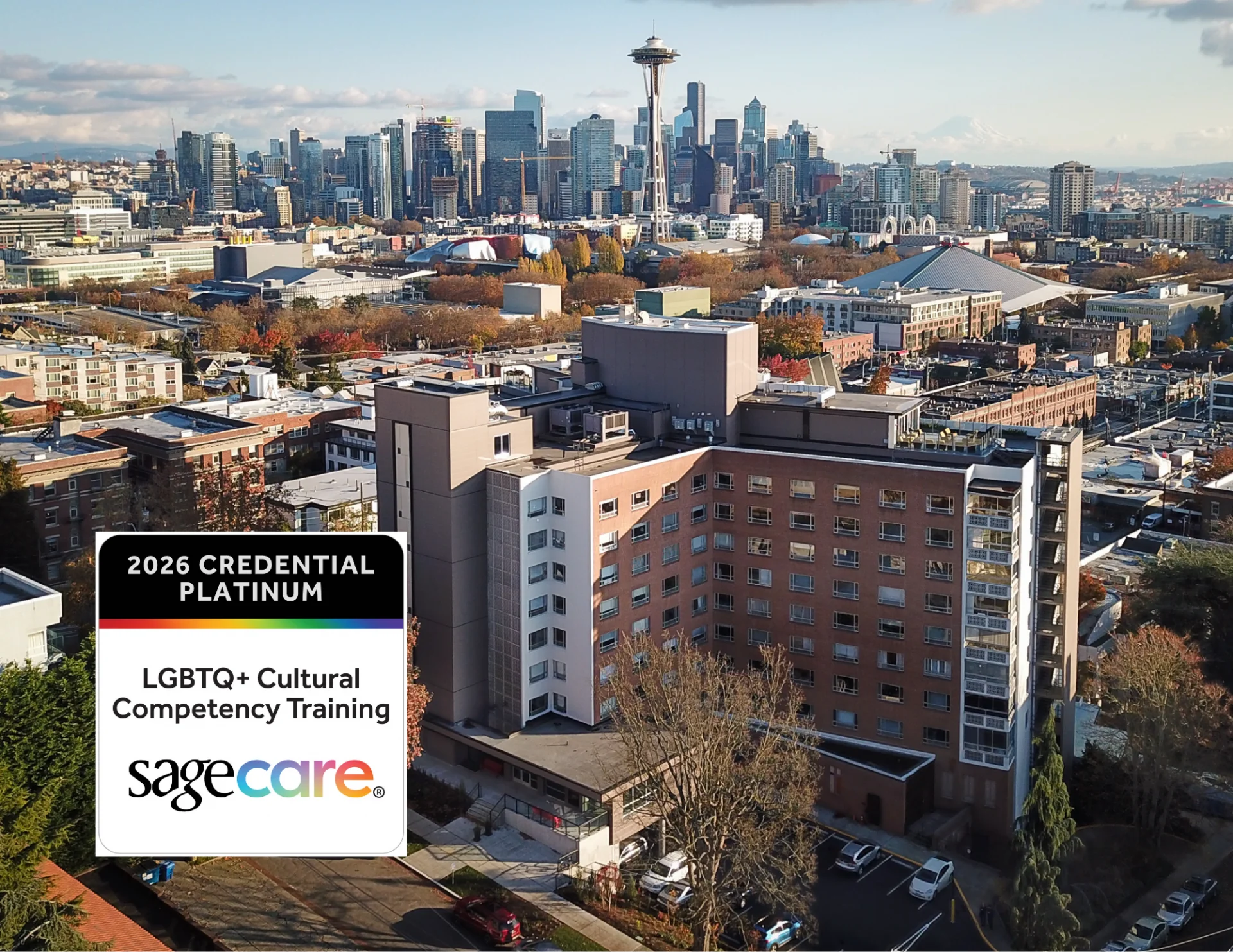
SAGECare offers different credential levels based on the amount of training completed. A SAGECare Platinum Credential means that at least 80% of management has completed leadership training and at least 80% of staff have completed an LGBTQ+ aging education course.
While a certification should not be the only factor in choosing a community, it can be a helpful part of the conversation.
Consider asking:
The answers can help you better understand whether inclusion is reflected throughout the community.
Choosing a senior living community is a personal decision. The conversations you have during your search can help you understand whether a community will respect who you are and what matters to you.
You deserve clear, thoughtful answers. Don’t hesitate to ask direct questions. The way a community responds can tell you a great deal about its culture.
Consider asking:
How do you help people feel welcome when they move here?
This question can reveal how a community thinks about belonging. Listen for specific examples of how people are introduced and included after they arrive.
How are partners and chosen family included?
For many people, the people closest to them may not fit a traditional family structure. Ask how the community recognizes those important relationships and includes them in conversations.
How are LGBTQ+ people represented in the community?
Ask whether LGBTQ+ identities and relationships are reflected in community activities and conversations. Representation can help show whether inclusion is part of the broader culture.
How do you support respectful communication?
You can ask how the community approaches names, pronouns, and personal preferences. Small details often shape whether someone feels comfortable being themselves.
What training has the team received?
Ask about LGBTQ+ aging education and whether training is ongoing. A community’s approach to education can provide insight into how seriously it takes creating a respectful environment.
The answers may help you understand how a community approaches inclusion and whether it feels like a place where you can continue being yourself.
Choosing a senior living community often requires looking beyond first impressions. A welcoming conversation or a statement about inclusion can be a good starting point, but the deeper question is how those values are reflected throughout the community.
As you visit communities, pay attention to the details.
Are people comfortable speaking openly about their lives? Are LGBTQ+ relationships and identities acknowledged without hesitation? Do the answers to your questions reflect an understanding of the experiences that may shape someone’s decision to move?
You may also notice signs such as:
It is also okay to trust your instincts. The way people respond to your questions can tell you a lot. A community that values inclusion should be willing to listen, learn, and have honest conversations.
Every person deserves to feel safe, respected, and free to be themselves. Finding the right community is about finding a place where you can continue living with confidence and a sense of belonging.
What Bayview’s Platinum SAGECare Certification Looks Like in Practice
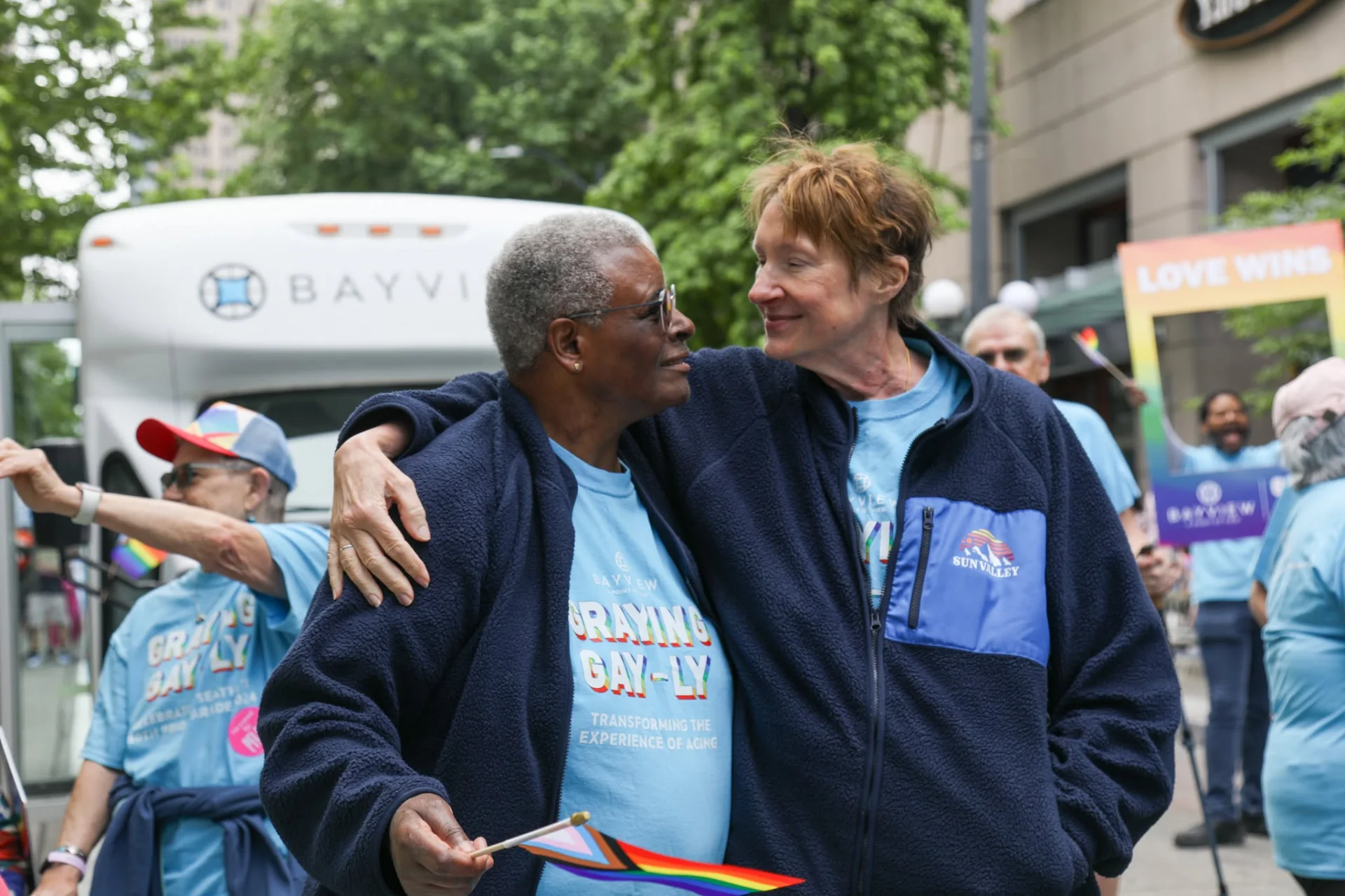
At Bayview, inclusion is rooted in the belief that people should be recognized for who they are.
As a SAGECare Platinum Credentialed community, Bayview has invested in LGBTQ+ aging education across the organization. This means at least 80% of management has completed leadership training, and at least 80% of our team have completed SAGECare’s LGBTQ+ aging education course.
The training provides a foundation for understanding the experiences that may shape how someone approaches senior living. It helps build awareness around identity, relationships, and respectful communication.
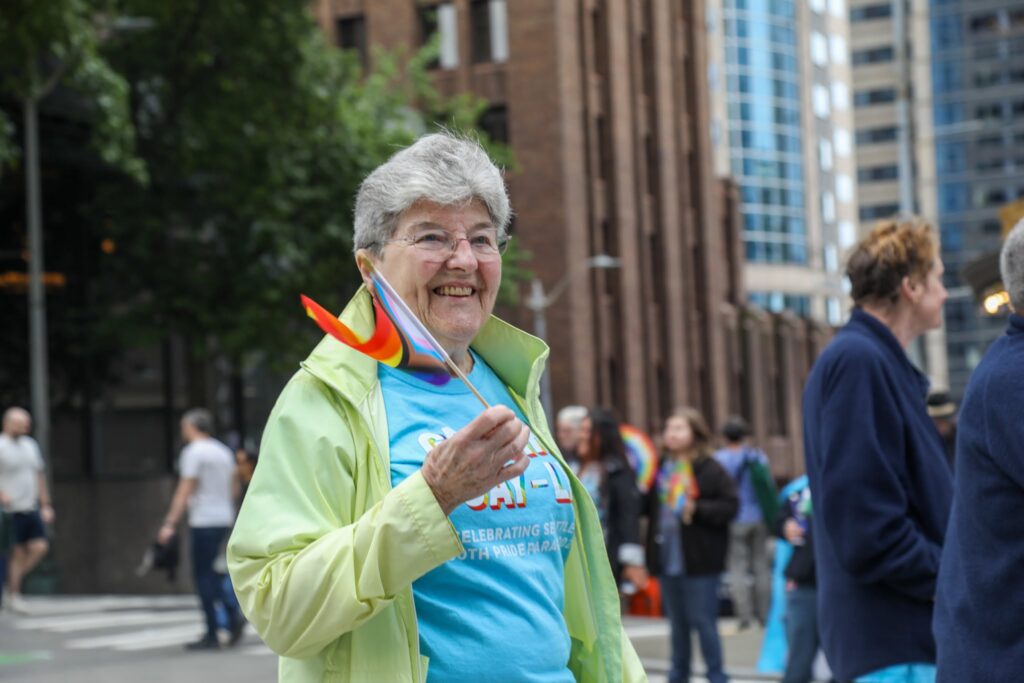
For Bayview, that commitment extends beyond a certification. It is reflected in how people connect with one another and in the culture that develops throughout the community. Residents bring diverse backgrounds, perspectives, and stories, shaping a place where people can continue to be themselves.
Founded in 1961, Bayview is a nonprofit Life Plan Community in Seattle’s Queen Anne neighborhood. For more than six decades, we have been guided by the belief that people deserve a place where they can continue to grow throughout their lives.
If you are beginning to explore senior living options, learning more about a community’s culture and approach can help you decide what matters most in your search.
To learn more about life at Bayview, explore our community and discover what makes us unique.
When you have questions about what inclusive senior living can look like, our team is here to help. Contact our team to learn more about our approach to inclusive living.
Bayview is a nonprofit Life Plan Community in Seattle’s Lower Queen Anne neighborhood offering independent living, assisted living, and memory care. A senior living Seattle community founded in 1961, Bayview features 200+ monthly activities, an intergenerational children’s center, and a strong commitment to LGBTQ+ inclusion through SAGECare Platinum certification.






Copyright © 2026 Bayview Community All rights reserved.